Pakistan produces around 800,000 university graduates every year, but the economy cannot generate enough suitable jobs for all of them. As technology and artificial intelligence reshape traditional roles, students need more than academic qualifications to build sustainable careers.
Universities must prepare graduates not only to apply for jobs, but also to identify problems, develop solutions and create employment through entrepreneurship.
Essential Entrepreneurial Skills
Students do not need to launch a company immediately after graduation. However, they should understand how ideas become viable products or services.
Important skills include:
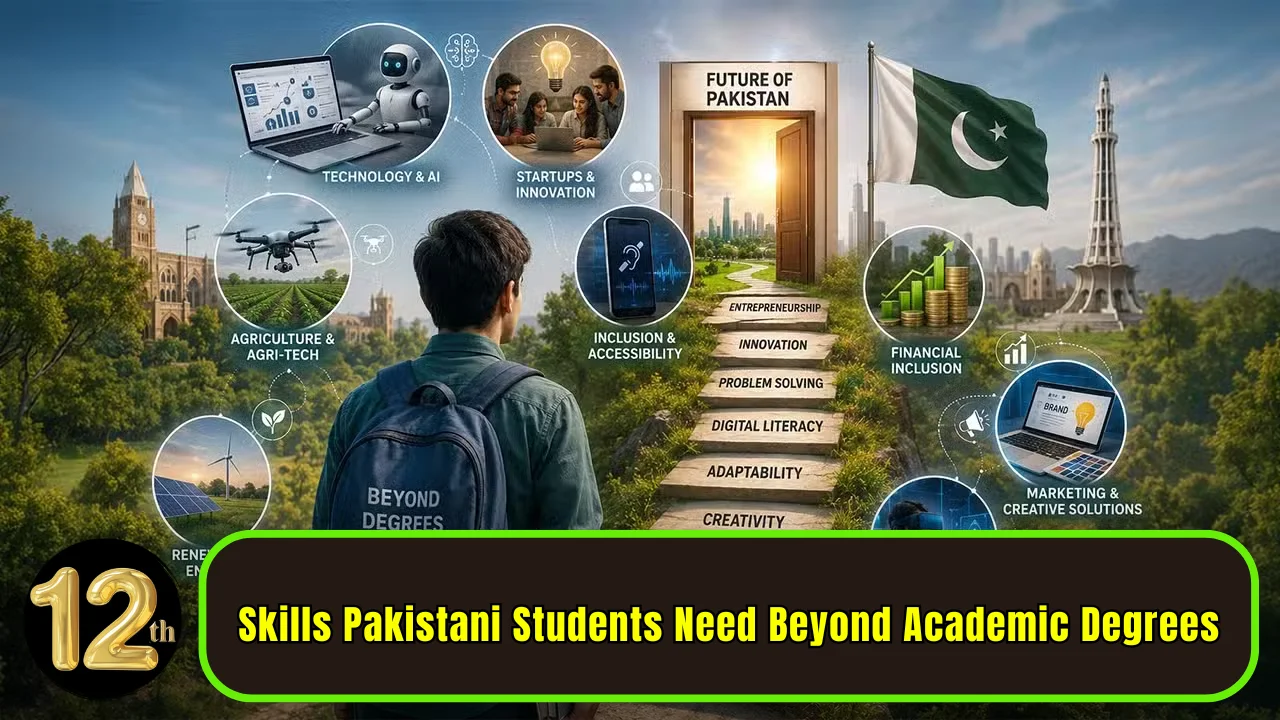
- Problem-solving and critical thinking
- Digital and financial literacy
- Communication and negotiation
- Market research and customer understanding
- Teamwork and leadership
- Risk assessment and adaptability
These abilities are useful in startups, established companies, freelance work and family businesses.
Students Can Build Solutions Around Local Problems
Pakistan offers opportunities in agriculture, energy, healthcare, education, financial inclusion, waste management and digital services.
Habib University graduates, for example, have developed ventures in areas such as financial automation, agricultural technology, software development, composting, disability access, renewable energy and virtual reality.
Their work shows that successful ideas often emerge from understanding a genuine problem and designing a practical solution around it.
What Universities Should Change
Entrepreneurship should not be limited to a single optional course. Students need access to business incubation, industry mentors, prototype funding, internships and opportunities to test ideas with real customers.
Assessment should also reward creativity, collaboration and practical execution rather than depending entirely on examinations and memorisation.
Pakistan will continue to need doctors, engineers, teachers and other professionals. However, graduates who combine technical knowledge with entrepreneurial thinking will be better prepared to create opportunities for themselves and others.
A degree remains valuable, but the ability to turn knowledge into economic and social value is becoming equally important.