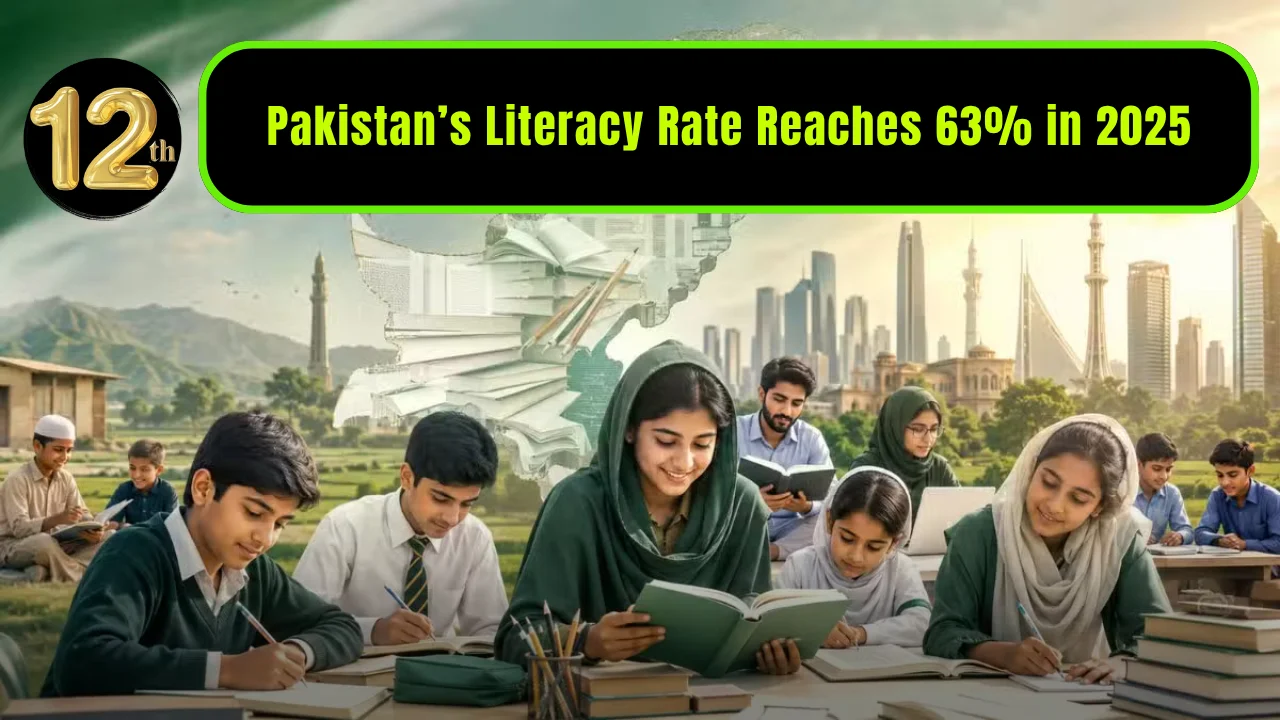
Pakistan’s literacy rate increased to 63% in 2025, according to the Pakistan Economic Survey 2025-26 released on June 11, 2026.
The latest figure shows an improvement from 60.6% in FY 2024-25, reflecting gradual progress in educational attainment across the country.
The literacy data is based on findings from the 2025 Population and Housing Census.
Literacy Improves, But Challenges Remain
While the increase is a positive sign, the survey indicates that a significant portion of Pakistan’s population still lacks basic reading and writing skills.
Education experts note that literacy remains closely linked to:
- Employment opportunities
- Income growth
- Digital inclusion
- Social mobility
- Economic development
Urban-Rural Literacy Gap Persists
The survey highlights a substantial difference between urban and rural literacy levels.
Literacy Rate by Area
| Area | Literacy Rate |
|---|---|
| Urban Areas | 74% |
| Rural Areas | 55% |
The 19-percentage-point gap suggests that access to quality education remains considerably more limited in many rural communities.
Education Funding Remains Low
The Economic Survey also reported that Pakistan spent:
💰 Rs. 962 billion on education during FY 2025-26
However, total education spending accounted for only:
📊 0.8% of GDP
which remains below levels recommended by many education experts and international organizations.
Education Expected to Remain a Budget Priority
The survey was released just before the presentation of the Federal Budget 2026-27, where education indicators are expected to receive attention from policymakers.
Key areas often highlighted for improvement include:
- School access in underserved regions
- Teacher training and quality
- Learning outcomes
- Girls’ education
- Education infrastructure
Need for Continued Investment
Experts believe sustained improvements in literacy will require:
- Greater investment in education
- Better access to schools
- Improved teacher development programs
- Expanded learning opportunities in rural areas
The latest figures show progress, but they also underline the scale of work still needed to improve literacy levels nationwide and reduce educational disparities between different regions of Pakistan.